
 Families & communities
Java and Sulawesi
Family Financial Skills
Trainers from farmer organisations are trained and assessed, then coach families to record seasonal cash flow, debt, savings and business decisions.
Support for coconut tappers and sugar-making households: tree health, sap quality, clean production kitchens and household business records.
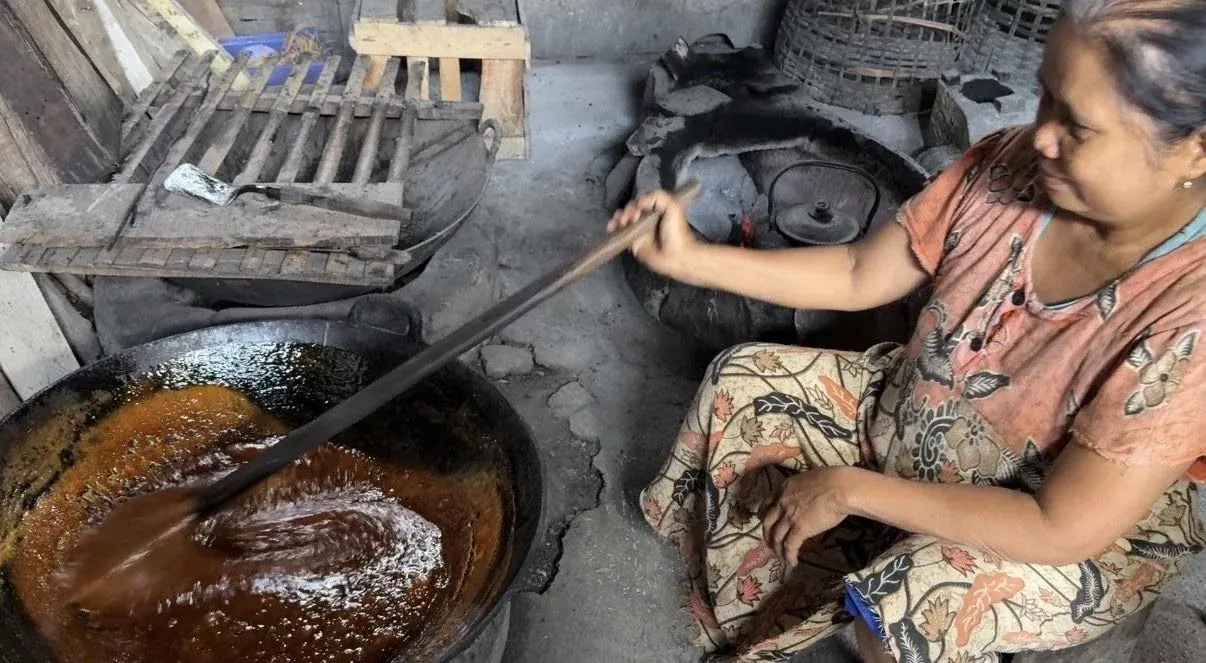
In Banyumas, coconut sugar is made in household kitchens from sap tapped every morning and afternoon. Quality is decided at the tree: unclean tapping containers or sap that waits too long before cooking leads to sugar that spoils or is rejected by buyers. In September 2026, the Hasbi team held focus group discussions with farmers, processors and prospective trainers in several villages to test the training modules before use.
Develop village trainers and working habits that keep coconut trees healthier, make sugar quality more consistent and help households make better business decisions.
Coconut-tapping and sugar-making households, including the women who run production kitchens, and villagers preparing to become trainers.
Discussions with farmers, processors and prospective trainers decide which material is used.
Prospective Coconut Doctors and Sugar Masters practise content, field skills and facilitation.
Each champion is planned to support up to 70 households, aiming for one visit per household per month.
Difficult problems go to Hasbi's agronomy, environment and food-technology specialists; visit records are reviewed together.
These are the things assessed during the programme, not verified results. Results are reported after delivery and checks.
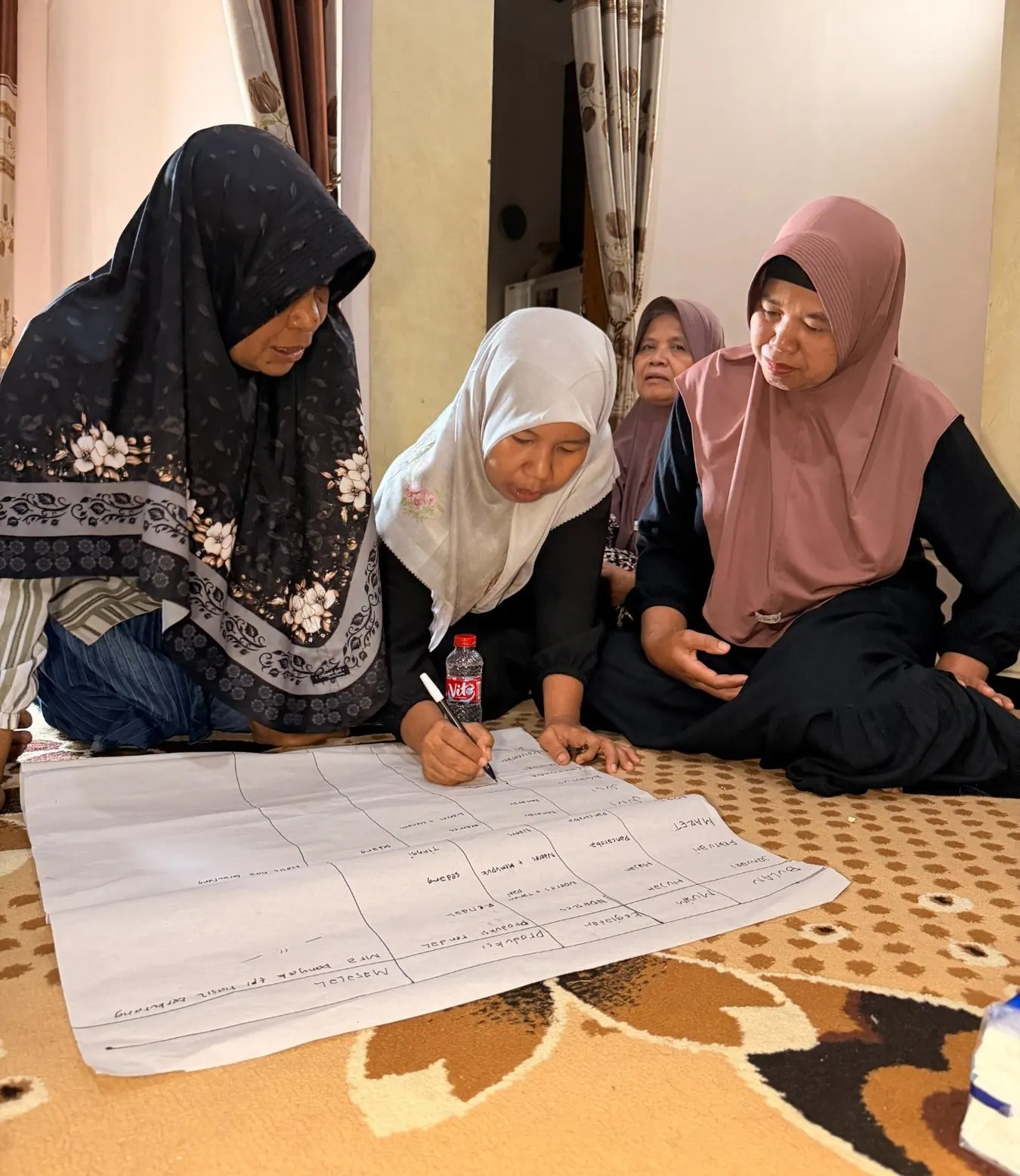
 Families & communities
Trainers from farmer organisations are trained and assessed, then coach families to record seasonal cash flow, debt, savings and business decisions.
 Forests & land
A network of agroforestry and food farms designed with landowners that double as practice sites for nearby farmers and communities.
Tell us the goal and the area. We will come back with first questions for an assessment and a split of roles.